
Sri Ramakrishna (1836–1886)
Sri Ramakrishna Paramahamsa (1836–1886), born as Gadadhar Chattopadhyay in Kamarpukur, West Bengal, is one of India’s greatest spiritual masters. Revered as Thakur Sri Ramakrishna, he dedicated his life to the realization of God through intense spiritual practice and direct experience. As the priest of the Dakshineswar Kali Temple, he attained profound mystical experiences and taught that all religions lead to the same ultimate truth, expressing his timeless message: “Yato Mat, Tato Path” (As many faiths, so many paths).
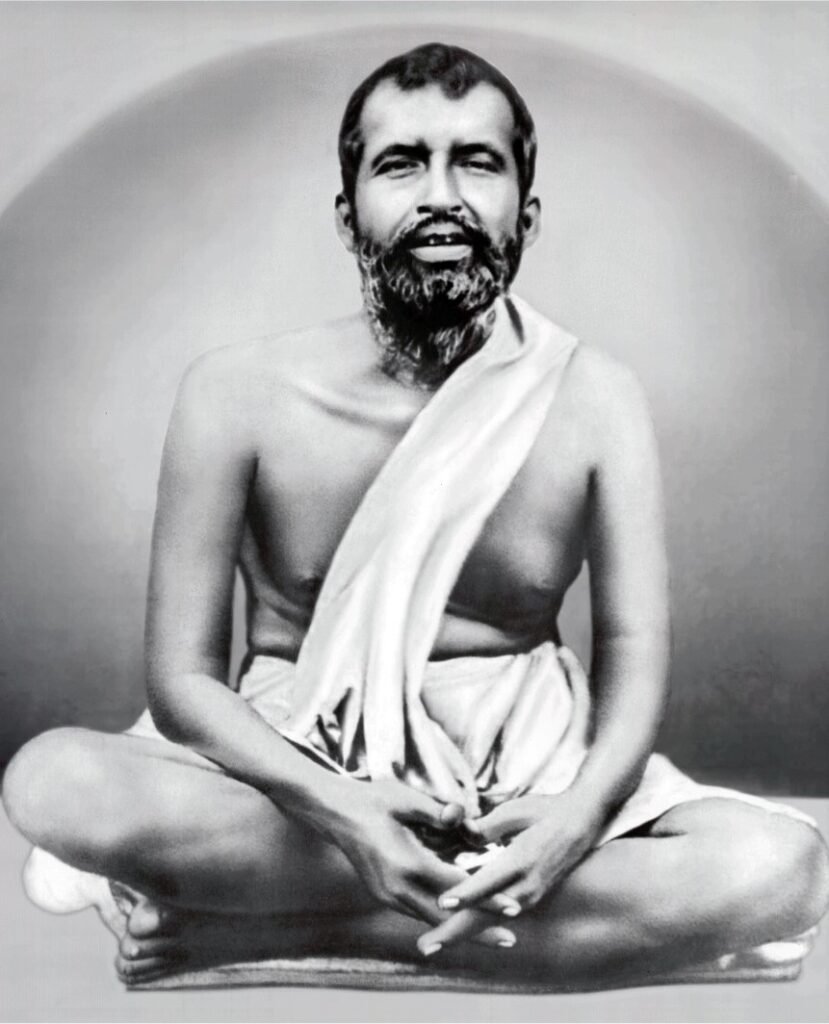
Sri Ramakrishna’s Teachings
Unlike many religious teachers, Sri Ramakrishna personally practiced Hinduism, Islam, and Christianity. Through his spiritual experiences, he taught that sincere paths can lead to the same Divine Truth.
His teachings focused on devotion, purity, selfless service, and compassion. He also emphasized the divinity present in every human being. As a result, his message attracted countless spiritual seekers.
Among them was Swami Vivekananda, who later carried Sri Ramakrishna’s message of Vedanta and universal harmony across the world.
The Gospel of Sri Ramakrishna
Sri Ramakrishna’s conversations were later recorded in the famous book The Gospel of Sri Ramakrishna. The book continues to inspire spiritual seekers around the world.
Moreover, his life helped inspire the formation of the Ramakrishna Math and Ramakrishna Mission. These institutions focus on spirituality, education, and humanitarian service.
Today, Sri Ramakrishna remains a global symbol of religious harmony, God-realization, and universal love. His teachings encourage people to live with faith, compassion, truthfulness, and selfless service.
He also taught respect for different religions. According to his spiritual message, different faiths can offer different paths toward the same Divine Reality.
Sri Ramakrishna and Keshab Chandra Sen
In 1875, Sri Ramakrishna met Keshab Chandra Sen, a prominent leader of the Brahmo Samaj. Keshab became deeply interested in Ramakrishna’s ideas about religious harmony.
Later, Keshab promoted the New Dispensation (Nava Vidhan) movement. It emphasized the unity of different religious traditions and the idea of a common Divine Truth.
Through his writings and lectures, Keshab helped introduce Sri Ramakrishna’s teachings to the educated society of Bengal. Consequently, Ramakrishna’s message gained wider recognition.
Swami Vivekananda and His Disciples
Among Sri Ramakrishna’s disciples, Swami Vivekananda (Narendranath Dutta) became one of his most influential messengers.
In 1893, Vivekananda delivered his famous speech at the Parliament of the World’s Religions in Chicago. His appearance introduced Indian spiritual thought and the message of religious harmony to an international audience.
Other disciples also helped preserve and spread Sri Ramakrishna’s spiritual legacy. They included Swami Brahmananda, Swami Saradananda, Swami Shivananda, and Swami Abhedananda.
Together, these disciples played an important role in carrying forward his teachings. Their work helped establish Sri Ramakrishna’s spiritual message as an influential part of modern Hindu thought.
you can visit out Kamarpukur & Jayrambai Tour