
Gangasagar is more than a pilgrimage—it is a sacred confluence of faith, culture, emotion, and tradition. Celebrated on the eve of Makar Sankranti, it reflects India’s deep spiritual roots and cultural unity. As the Sun enters Capricorn, the festival marks the end of winter, the arrival of longer days, positivity, renewal, and the beginning of the harvest season. Devotees worship Surya Dev, expressing gratitude for prosperity, good harvests, and harmony with nature.
Thank you for reading this post, don’t forget to subscribe!Across India, Makar Sankranti is celebrated with traditional sweets made of sesame and jaggery, along with joyful customs like kite flying, symbolizing freedom and togetherness.
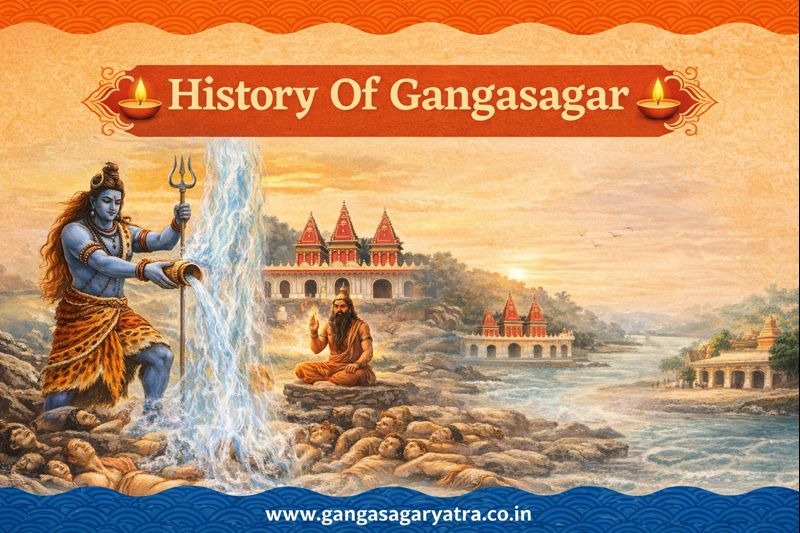
Gangasagar’s sanctity is rooted in ancient legends. King Sagara’s 60,000 sons were liberated when the holy Ganga descended to earth through the penance of Bhagiratha, washing away their sins at this very spot. The site is further blessed by the presence of Sage Kapila, an incarnation of Lord Vishnu, who is believed to reside here even today.
Scriptures also record the visits of Lord Balarama and Lord Nityananda Prabhu, adding immense spiritual significance to Gangasagar.
Today, Gangasagar stands as a timeless spiritual destination, drawing pilgrims from across the world who seek purification, peace, and divine grace at the sacred confluence of the Ganga and the Bay of Bengal.
We Also Provide Pilgrimage Tour packagesTo – Ayodhya Ram Mandir Tour Package, Durga Puja Parikrama Package, Bramha Datta Dham Tour Package, Champaran Puri Gangasagar Tour, Champaran Tour Package, Char Dham Yatra Tour Package, Dakshineswar Kalighat Belur Math Tour, Deoghar Tour Package, Dwarka Somnath Gujarat Tour Package, Gangasagar One Day Tour Packages From Kolkata, Gangasagar Mela, Jagannath Puri Rath Yatra, Jagannath Puri Kolkata Gangasagar Tour Package, Kamarpukur Jairambati Temple Darshan Tour, Kolkata City Tour, Kolkata Temple Tour, Kumbh Mela Tour Packages, Mahaprabhu Baithak Ji Pilgrimage Tour, Mayapur One Day Tour Package, Puri Tour Package, Tarakeswar Tour Package, Tarapith Tour Package , Tirupati Balaji Tour Package From Chennai, Ujjain Mahakal Omkareshwar Jyotirlinga Tour Packages, Varanasi Tour Packages, West Bengal Shakti Peeth Tour Package