
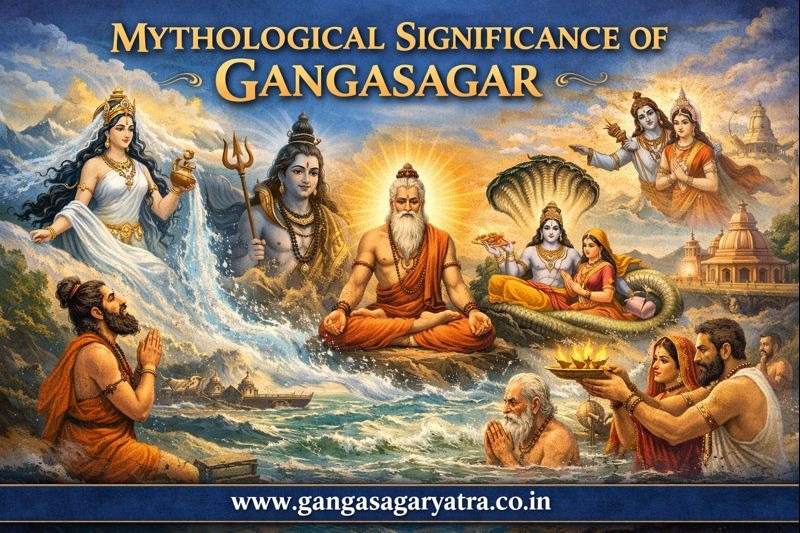
Gangasagar, situated on Sagar Island at the confluence of the River Ganga and the Bay of Bengal, is one of Hinduism’s most sacred pilgrimage sites. Deeply rooted in mythology, it draws thousands of devotees each year seeking spiritual purification and divine blessings.
According to legend, King Sagara performed the Ashwamedha Yagna, during which Indra stole the sacrificial horse and hid it near the ashram of Sage Kapil Muni. Mistakenly accusing the sage, King Sagara’s 60,000 sons were reduced to ashes by his divine power and were denied liberation.
Generations later, King Bhagiratha performed intense penance to bring the holy river Ganga down to earth to purify their ashes. With the help of Lord Shiva, who controlled Ganga’s powerful descent, the sacred river reached Gangasagar, granting moksha to Sagara’s sons.
Every year during Makar Sankranti, pilgrims gather at Gangasagar for a holy dip at this sacred confluence, believing it washes away sins and brings spiritual upliftment. This grand event, known as the Gangasagar Mela, is one of the largest religious gatherings in India.
The Kapil Muni Temple stands as a major spiritual center, along with several ashrams that support pilgrims and seekers. Gangasagar symbolizes devotion, redemption, and the eternal sanctity of the Ganga, continuing to inspire faith and spiritual renewal for millions.
More about kapil muni ashram