
108 Shiv Mandir, Nababhat, Bardhaman – History, Architecture & Visitor Guide
The 108 Shiv Mandir (Shiva Temple Complex) at Nababhat, Bardhaman (Burdwan), West Bengal is one of the state’s most important Shiva pilgrimage sites. Built in 1788 AD by Maharani Bishnu Kumari Devi, wife of Maharaja Tilak Chandra Bahadur of the Bardhaman Royal Family, this heritage temple complex is renowned for its unique layout, peaceful atmosphere, and spiritual significance.
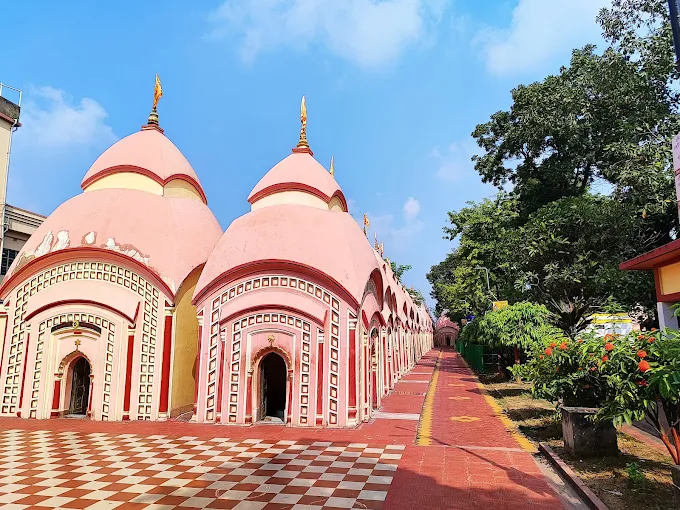
The complex features 108 Aatchala-style (eight-roofed) Shiva temples arranged in a rectangular pattern around two large ponds. Each temple houses a black stone Shiva Lingam, making it a sacred destination for devotees throughout the year, especially during Maha Shivaratri and the holy month of Shravan.
Although popularly known as the 108 Shiv Mandir, historical records mention 109 Shiva temples, each dedicated to Lord Shiva under a different sacred name. The temple complex was restored in 1965 by the Birla Jana Kalyan Trust and is now managed by the 108 Shiv Mandir Trust Board.
Located about 4–5 km from Bardhaman Railway Station, the temple is surrounded by gardens, ancient trees, serene ponds, and the famous 108 bells, creating a calm and devotional atmosphere. Visitors can also see marble Nandi statues, a prayer pavilion, and beautifully maintained pathways.
Whether you are a pilgrim, history enthusiast, or architecture lover, 108 Shiv Mandir, Nababhat is a must-visit heritage destination in West Bengal, offering a perfect blend of spirituality, history, and traditional Bengali temple architecture.
The 109 Sacred Names of Lord Shiva at 108 Shiv Mandir, Nababhat, Bardhaman:
Although the temple complex is popularly known as the 108 Shiv Mandir (108 Shiva Temples), it actually consists of 109 temples. Each temple enshrines a black Kashti stone (black touchstone) Shiva Lingam dedicated to Lord Shiva under a unique sacred name.
According to the book “Bardhaman 108 Shiv Mandir” written by Nirad Baran Sarkar, the names of all 109 Shiva Lingams were published in the 12th Ashwin, 1257 Bengali Era edition of the newspaper Sangbad Bardhaman.
The 109 Shiva Lingams are dedicated to Lord Shiva in the following forms:
- Sthanu
- Ugra
- Mahakala
- Vibhu
- Maheshwara
- Shiva
- Shula
- Shulapani
- Rudra Digambara
- Maharudra
- Paramesh
- Varanasipati
- Adinath
- Sadashiva
- Shri Vishwapati
- Chandrachuda
- Bama Linga
- Kapilingeshwara
- Siddhinath
- Kripanath
- Shri Tarakeshwar
- Vishadhwaja
- Nageshwara
- Keshava
- Vibhuti
- Shri Kapardi
- Jati
- Shambhu
- Shri Pramathapati
- Kripanath
- Papahari
- Vighna Vinashaka
- Bhojanath
- Bakreshwar
- Yogi Janardana
- Harihara
- Jagatguru
- Kubereshwara
- Bhutanath
- Chakreshwara
- Shri Ravaneshwara
- Jagannath
- Jaleshwara
- Lakshmikanteshwara
- Vishwapati
- Jnaneshwara
- Shri Ghanteshwara
- Umapati
- Shivapriya
- Shri Vasukipati
- Ramapati
- Vishwapati
- Agatir Gati
- Yadunath
- Pareshnath
- Pushpadanteshwara
- Lakshmikanta
- Shivakanta
- Yadukaleshwara
- Tilabhandareshwara
- Yogi Baranapati
- Nagabhatta
- Nadarupi
- Nilakantheshwara
- Chaturbhuja
- Trilochana
- Raja Rajeshwara
- Mrityunjaya
- Kashinath
- Shri Panchabadana
- Madana
- Antakadandi
- Bhujanga Bhushana
- Ashutosha
- Tilaka Vijayee
- Janardana
- Sanatana
- Sabarnava Jayee
- Vishwakarta
- Paramaguru
- Chakri
- Chandranatha
- Paratpara
- Gurudhwani
- Pushpadanta
- Aishvaka
- Ishana
- Badri
- Shri Rudra Murti
- Mahavishnu
- Shekhara
- Shri Bhairavapati
- Kaleshwara
- Gangadhara
- Shashanka Shekhara
- Parvatipati
- Pranaballabha
- Kapirajanatha
- Madan Ari
- Shura Ari
- Raksha Yajneshwara
- Somanatha
- Tivratapa
- Jyoti Kuladhana
- Vishwagrasi
- Sarvagrasi
- Satyanandanatha
- Trataka Ishwara
These 109 sacred names represent the many divine manifestations and attributes of Lord Shiva, making the Nababhat Shiva Temple Complex one of the most unique and spiritually significant Shaivite pilgrimage sites in West Bengal.