
Mahesh Jagannath Temple & Rath Yatra – History, Snana Yatra and Significance
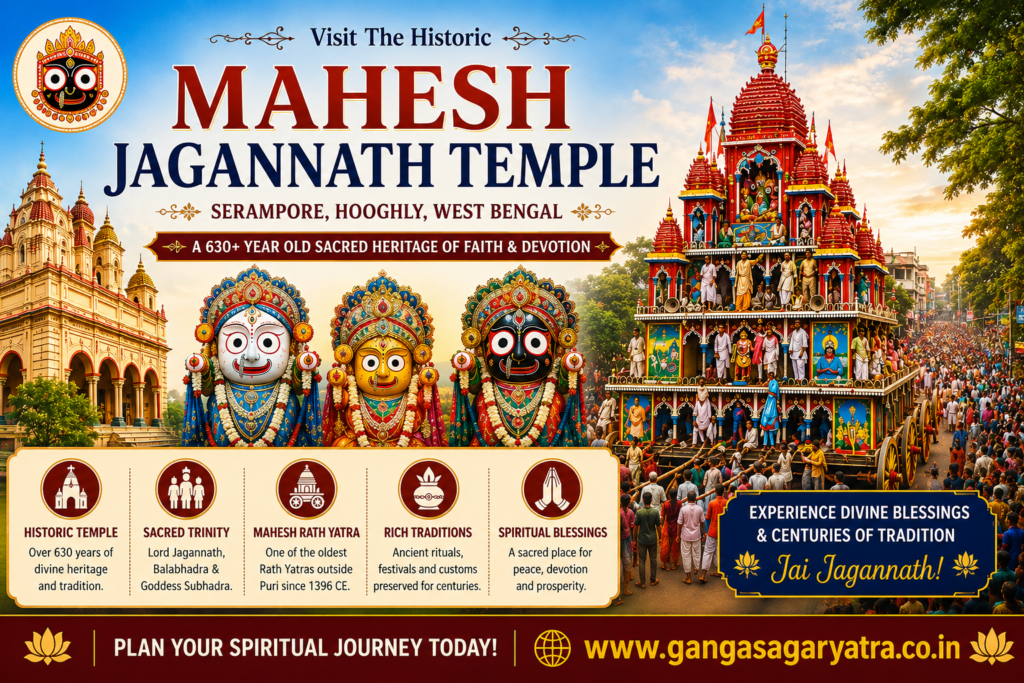
The Mahesh Jagannath Temple in Serampore, Hooghly, is home to one of the oldest Jagannath Rath Yatra festivals outside Puri. The tradition began in 1396 CE, making it more than 630 years old and one of West Bengal’s most important religious celebrations.
Mahesh Jagannath Snana Yatra
Every year, the Snana Yatra marks the ceremonial bathing of Lord Jagannath, Lord Balabhadra, and Goddess Subhadra before the Rath Yatra. During this sacred festival, temple priests bathe the deities with 28 pitchers of holy Ganga water and one-and-a-half maunds of milk. After the ritual, devotees believe that Lord Jagannath falls ill and enters the 14-day Anasara period. During this time, the priests perform symbolic Ayurvedic treatment while the temple remains closed to visitors. Finally, the temple reopens on Nabajouban Utsav, celebrating the renewed appearance of the deities before the grand Mahesh Rath Yatra.
Mahesh Rath Yatra Sreerampur
The Mahesh Rath Yatra is one of the oldest Jagannath festivals outside Odisha and attracts more than 200,000 devotees every year. During the procession, Lord Jagannath, Lord Balabhadra, and Goddess Subhadra travel together on a magnificent 50-foot-high, four-storeyed Navaratna-style chariot weighing around 125 tonnes. Unlike the Puri Rath Yatra, Mahesh uses one grand chariot for all three deities. Moreover, the chariot features twelve iron wheels and has served the festival since 1885. Krishnaram Basu sponsored its construction, while the Martin Burn Company built it. The procession begins at the Mahesh Jagannath Temple and continues to Gundicha Bari (Masir Bari), where thousands of devotees gather to seek the Lord’s blessings.
History of Mahesh Jagannath Temple
The Mahesh Jagannath Temple has preserved its rich spiritual heritage for more than 630 years. According to tradition, Sri Chaitanya Mahaprabhu visited Mahesh on his way to Puri and entered deep devotional ecstasy. As a result, devotees began calling the place Naba Nilachal New Puri. Another popular legend tells that Dhrubananda Brahmachari received divine guidance from Lord Jagannath to carve the sacred idols from a Daru Brahma (holy neem log) that appeared in the Hooghly River. Unlike the Puri Jagannath Temple, the Mahesh temple still worships the original wooden idols. For over six centuries, devotees have continued to offer prayers to the same sacred deities, making Mahesh one of the most unique Jagannath temples in India.
Why Visit Mahesh Jagannath Temple?
The Mahesh Jagannath Temple is a major pilgrimage destination in West Bengal, renowned for its centuries-old traditions, historic Rath Yatra, sacred Snana Yatra, and deep connection with Lord Jagannath. Every year, thousands of devotees gather here to experience one of India’s oldest and most revered Jagannath festivals outside Odisha.
Mahesh Jagannath Temple Daily Timings & Rituals
| Time | Ritual | Description |
|---|---|---|
| 5:30 AM – 6:00 AM | Mangala Aarti | The first prayer of the day, welcoming devotees with sacred chants and divine blessings. |
| 6:00 AM – 2:00 PM | Morning Darshan | Temple remains open for darshan, prayer, and worship. Early morning is generally less crowded. |
| 7:30 AM | Morning Puja | Daily ritual worship performed by the temple priests. |
| 9:00 AM | Balya Bhog | Morning food offering presented to Lord Jagannath, Lord Balabhadra, and Goddess Subhadra. |
| 12:30 PM | Anna Bhog | Main midday offering of cooked rice and traditional prasad. |
| 4:00 PM – 9:00 PM | Evening Darshan | Temple reopens for devotees after the afternoon break. |
| 4:30 PM | Baikali Bhog | Afternoon offering performed before the evening rituals. |
| 6:15 PM | Sandhya Aarti | Evening lamp ceremony accompanied by devotional songs and prayers. |
| 7:00 PM | Shital Bhog | Evening food offering made to the deities. |
| 8:45 PM – 9:00 PM | Shayan Aarti | The final ritual of the day, marking the Lord’s symbolic rest before the temple closes. |